

Tankless


Tankless Water Heater Retrofits
Upgrade Your Home From Traditional Tanks to a Professionally Designed Tankless System
Upgrading from a traditional tank-style water heater to tankless isn't always a simple swap. AMP | Arlington Mansfield Plumbing specializes in complete tankless water heater retrofits, converting existing plumbing systems for the proper installation and performance of today's high-efficiency tankless equipment
Whether you're replacing a single 50-gallon water heater with one tankless unit, converting a dual water heater setup to a single high-capacity tankless system, or installing dual tankless units for larger homes and higher hot-water demand, we evaluate the entire system—not just the water heater.
A proper retrofit may include opening and repairing access through sheetrock, lowering or rerouting hot and cold water lines, evaluating and upgrading the gas supply, installing new venting, and providing the required condensate drain for high-efficiency condensing tankless units. We design the installation around the home's existing plumbing, gas capacity, hot-water demand, and equipment requirements.
High-End Tankless Systems With Hot-Water Recirculation
For homeowners looking for more than endless hot water, AMP can design and install tankless recirculation systems and dedicated circulation loops that dramatically reduce the wait for hot water at fixtures throughout the home.
From the water heater and gas piping to the recirculation loop, controls, isolation valves, condensate drainage, and final startup, we can build a complete high-end tankless system designed specifically for your home.
Single Tank → Tankless • Dual Tanks → Tankless • Dual Tankless Systems • Gas Upgrades • Condensate Drains • Recirculation Loops • Complete Retrofits Serving Arlington, Mansfield, Midlothian, Burleson and surrounding communities.
Tankless Water Heater Service, Repair & Deep Cleaning

Tankless Water Heater Service, Repair & Deep Cleaning
AMP doesn't just install tankless water heaters—we service and repair them too. With more than 20 years of hands-on experience installing, diagnosing, and repairing tankless systems, we understand what it takes to keep these units operating properly. Our tankless services include routine flushing and descaling, deep cleaning, diagnostic testing, error-code troubleshooting, component repairs, flow and temperature issues, ignition problems, circulation system service, and complete system evaluations. Whether your tankless water heater simply needs its annual maintenance or isn't producing hot water like it should, we can diagnose the problem and recommend the right repair before replacing equipment unnecessarily.
Rinnai
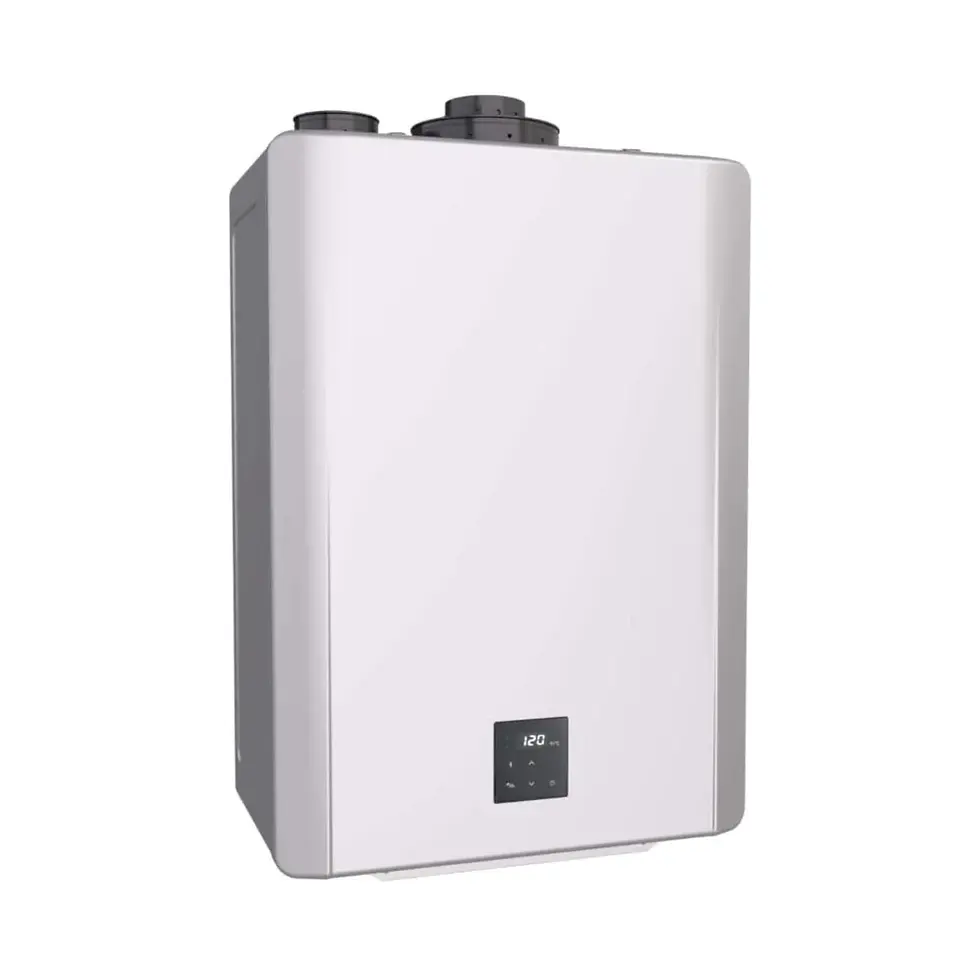


SENSEI® RX Series featuring the RXP Model with Built-in Pump and Smart-Circ™ Intelligent Recirculation features set these models out from the crowd.
Rinnai RE199eN 199,000 BTU Outdoor Non-Condensing Natural Gas Tankless Water Heater
Rinnai High Efficiency Non-Condensing 8.5 GPM Residential 180,000 BTU Interior Natural Gas Tankless Water Heater


Top 10 Tankless Water Heater Error Codes & How to Fix Them
These are the most common fault categories homeowners and plumbers encounter across major brands like Navien, Rinnai, Rheem, Noritz, Takagi, and A.O. Smith. Exact code numbers vary by manufacturer, but the causes are very similar.
Common Error What It Means How to Fix It
Flame Failure
Flame starts but won't stay lit.
Clean the flame rod, inspect the burner, and have gas pressure checked.
Venting / Exhaust Error
Blocked or restricted exhaust.
Remove obstructions, inspect intake/exhaust pipes, and verify proper vent installation.
4
Overheat Error
Water temperature exceeded the safety limit.
Clean the inlet filter, descale the heat exchanger, and verify adequate water flow.
5
Low Water Flow
Insufficient flow to activate the heater.
Clean faucet aerators and inlet filters, verify valves are fully open, and check incoming water pressure.
7
Thermistor / Temperature Sensor Fault
Temperature sensor isn't reading correctly.
Inspect wiring, check sensor resistance, and replace the sensor if faulty.
8
Check for debris, inspect electrical connections, and replace the fan if necessary.
9
Verify gas pressure with proper test equipment and inspect the gas valve.
10